
12 Most Common Mistakes in Performance Advertising (2025 Guide)

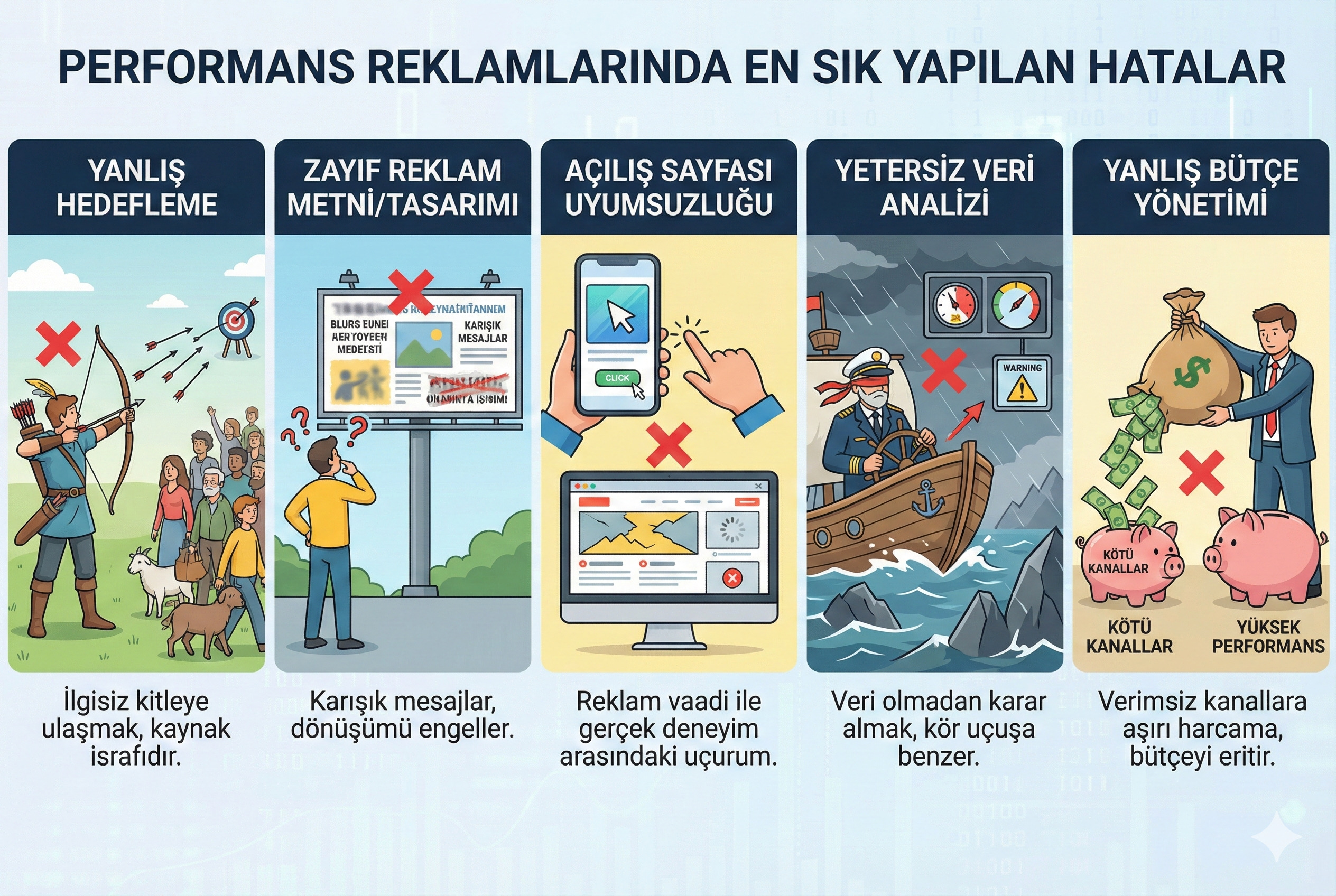
Performance advertising, when managed correctly, provides businesses with rapid sales, measurable results, and a high return on investment (ROAS). However, many brands unknowingly waste a significant portion of their advertising budget due to incorrect strategy, faulty setup, and insufficient analysis. While platforms like Google Ads and Meta Ads offer powerful tools, how you use these tools determines the fate of performance. With advertising costs increasing by 2025, the impact of mistakes made in performance advertising has become even more critical.
In this article, Common mistakes in performance advertising, We'll detail the budget losses caused by these errors and how each one can be fixed. If you're spending money on advertising but not getting the sales you expect, the problem most likely lies in one or more of the following errors.
1. Launching Ads Without Setting a Clear Goal
The biggest mistake with performance advertising is launching campaigns with a "let's try it and see" mentality.
Advertising without a target audience cannot be measured, and advertising that cannot be measured cannot be optimized.
The right approach:
- Is the goal to sell?
- Will leads be collected?
- Will brand awareness be increased?
- Will abandoned carts be reclaimed?
A separate campaign and a separate set of KPIs should be created for each goal.

2. Choosing the Wrong Target Audience
Even the best creative work won't yield results if shown to the wrong audience.
Many brands very narrow or too wide It advertises to the masses.
Mistakes made:
- Choosing interests randomly
- Showing ads to audiences who have no intention of buying.
- Lookalikes create masses with false data.
Solution:
A combination of data-driven segmentation + remarketing + lookalike.
3. Using Low-Quality Advertising Creatives
In performance advertising Creativity is everything.
Poor visuals and text increase CPM and CPC.
Common creative mistakes:
- Designs that don't convey a clear message.
- Images with excessive text
- Ads without CTA
- Mobile-incompatible videos
By 2025, advertising algorithms will be far more responsive to user interaction.
4. Misallocating the Advertising Budget
Investing the entire budget in a single campaign is one of the most common mistakes.
Wrong approach:
- %100 bütçe prospecting
- Not allocating any budget to remarketing.
An example of proper budget allocation:
- %50 Yeni müşteri (Prospecting)
- %30 Remarketing
- %20 Mevcut müşteri dönüşü
Campaigns with unbalanced budgets are not sustainable.

5. Sabotaging the Learning Process
Google Ads And Meta Ads has a "learning phase".
The biggest mistake made in this process: intervene constantly.
Errors:
- Changing the budget every day
- Turning ad sets on and off
- Frequently edit the target audience
This resets the algorithm's learning process.
6. Focusing on the Wrong KPIs
Getting clicks doesn't equate to performance.
Incorrect focus points:
- Just look at CPC
- Mistaking the number of likes and comments for success.
- Considering an advertisement successful when traffic increases.
The right KPIs:
- ROAS
- CPA
- Conversion rate
- Basket average
Performance advertising is done to increase sales and profitability.
7. Failing to Optimize the Landing Page
The ads might be good, but if the page is bad, sales won't come.
Common mistakes:
- Pages that load slowly
- Mobile-incompatible design
- Unclear CTA
- Lack of trust
Reklam trafiğinin %50’den fazlası landing page yüzünden kaybedilir.
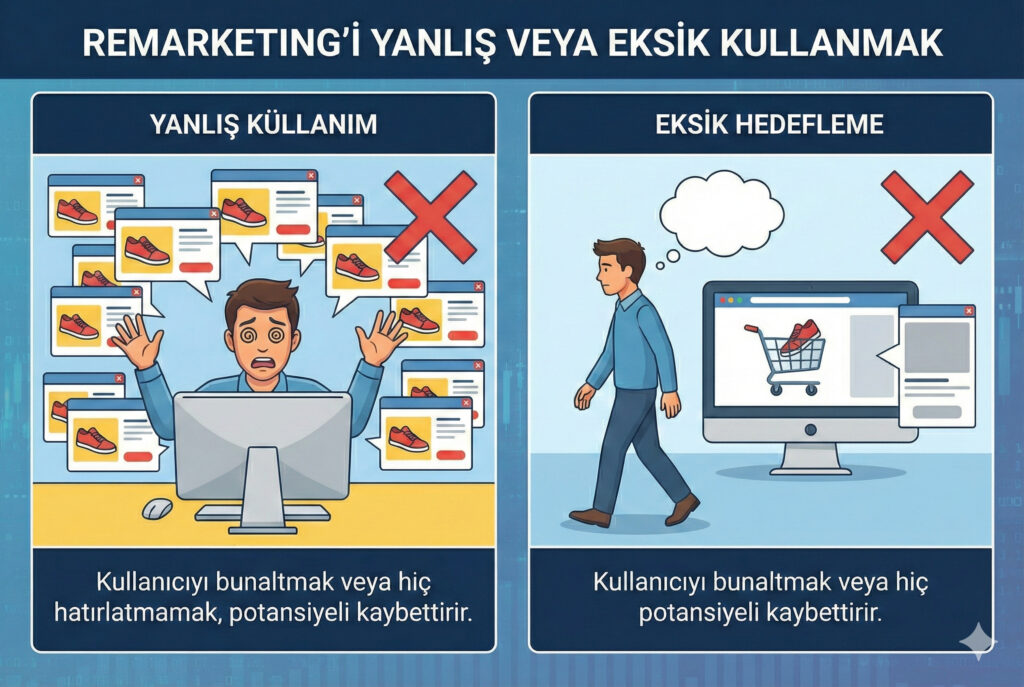
8. Using Remarketing Incorrectly or Incompletely
Remarketing is the most profitable area of performance advertising.
However, most brands either don't use this area at all or use it incorrectly.
Errors:
- Showing the same advertisement to all visitors
- Avoid product-based remarketing.
- Not separating those who leave the basket
Personalized remarketing can increase ROAS by 2–5 times.
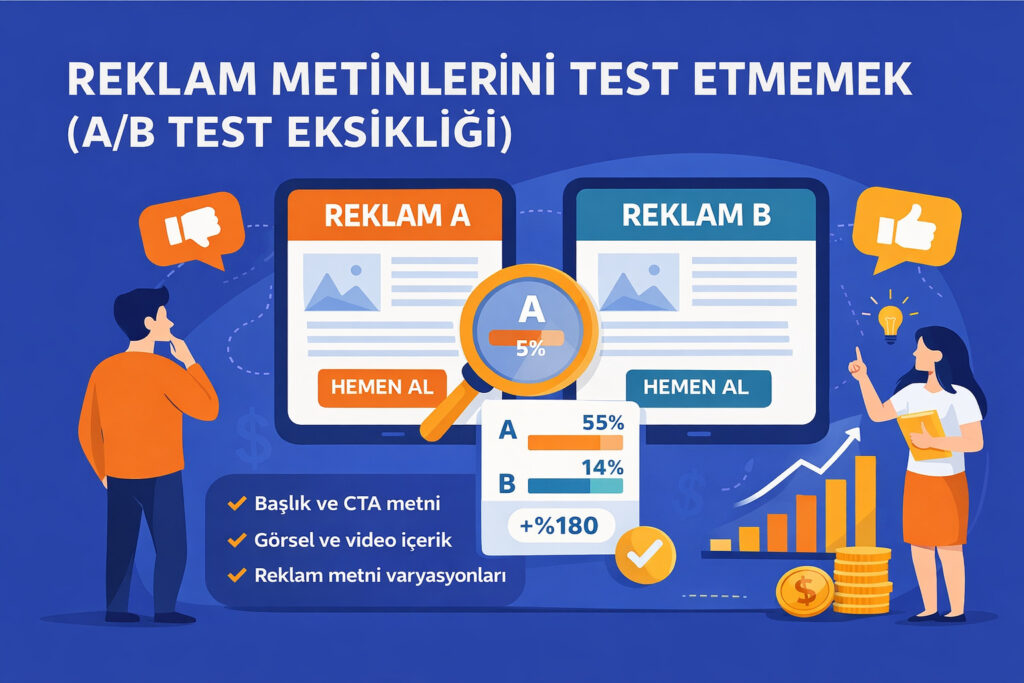
9. Failure to Test Ad Copy (Lack of A/B Testing)
One creative, one text, one headline = high risk.
Things to test:
- Title variations
- CTA texts
- Different images
- Video vs. image comparison
Ads that don't undergo A/B testing will die in the long run.
10. Expecting High Results with a Low Budget
Performance advertising is a matter of mathematics.
Facts:
- Low budget = limited data
- Limited data = incorrect optimization.
- Incorrect optimization = poor performance.
It's not accurate to say "ads aren't working" without a minimum testing budget.
11. Failure to Report and Analyze
Opening an ad and waiting is not performance management.
Things to analyze:
- Daily/hourly performance
- Device-based conversion
- Crowd-based ROAS
- Creative performances
Optimization without looking at the data is nothing more than guesswork.
12. Proceeding Without Professional Support
Performance advertising requires expertise.
Not every business needs to manage its own advertising.
Advantages of professional support:
- More results with a smaller budget.
- Faster optimization
- Strategic perspective
- Current algorithm information
Poorly managed advertising costs far more than the agency's expenses.
Conclusion: Making mistakes in performance advertising is costly.
Every mistake made in performance advertising directly translates to budget loss. Considering the increasing competition and costs in 2025, the cost of these mistakes will be even higher. With accurate targeting, powerful creatives, data-driven optimization, and professional management, performance advertising becomes one of the most powerful growth tools for businesses.