The Use of Artificial Intelligence in Digital Marketing


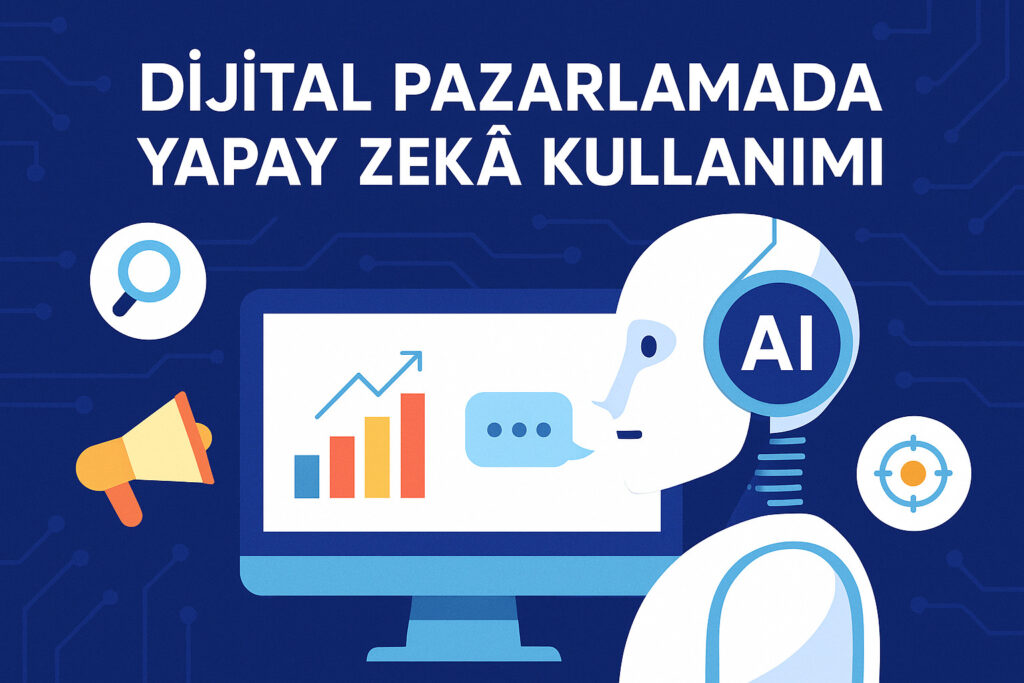
The use of Artificial Intelligence (AI) in digital marketing marks an era where it has become not just a supporting tool, but the very center of digital marketing processes. Algorithms have significantly increased the speed of analyzing customer data; systems have emerged that support, and in some cases completely replace, human labor in many areas such as content creation, ad optimization, segmentation, and sales forecasting.
Today, a business's ability to gain a competitive advantage in digital marketing is directly related to how accurately and strategically it uses artificial intelligence tools. Google, Meta, TikTok, and CRM platforms all offer AI-powered features. This enables a wide range of businesses, from SMEs to large brands, to achieve more effective, faster, and lower-cost growth.
In this comprehensive guide, we will examine the role of artificial intelligence in digital marketing, its use cases, innovations in 2025, advantages, and how your business can build an AI-powered marketing strategy, step by step.
What is Artificial Intelligence in Digital Marketing?
In digital marketing, artificial intelligence refers to the use of algorithms and software that analyze, predict, automate, and optimize customer behavior.
Artificial intelligence handles the following processes in marketing:
- Data analysis
- Content creation
- Ad optimization
- Customer segmentation
- Customer behavior forecasting
- Chatbot & customer service automation
- Providing a personalized experience
A simple example:
To reduce the conversion costs of a Google Ads campaign, you need to know which ads to show to which target audience. automatically It determines. This is precisely where the power of artificial intelligence lies: its capacity to make the right decision in milliseconds.
How is Artificial Intelligence Transforming Digital Marketing?
1. Automatic Ad Optimization
Google Ads, Meta Ads, and TikTok Ads are now handing over ad management entirely to AI algorithms.
In 2025:
- Ad texts are generated automatically.
- Target audiences are determined automatically.
- Combinations that yield the highest ROAS are being tested and implemented.
- Budgets are allocated based on performance.
This allows businesses to achieve higher conversion rates with a lower budget.
2. Personalized Customer Experience
AI provides a personalized experience for each user:
- Special promotions
- Special product recommendations
- Behavior-based automated emails
- User-specific content
Netflix’in öneri sistemi gibi, e-ticaret siteleri de artık kişiye özel ürün önerileri gösteriyor. Bu sayede satış oranları %30–50 artabiliyor.
3. Artificial Intelligence in Content Production
In 2025, content creation became faster and more efficient thanks to artificial intelligence:
- Blog posts
- Advertisement texts
- Social media content
- Visual production
- Video scripts
Businesses can now produce 300 pieces of content per month instead of 30, thanks to AI.
4. AI-Powered Customer Service (Chatbots)
Müşterilerin %70’i bir marka ile iletişime geçtiğinde instant response waiting.
Chatbots:
- It provides 24/7 service.
- It answers questions in seconds.
- It tracks orders.
- It solves frequently asked questions.
- It directs the customer to live support if necessary.
This both increases customer satisfaction and reduces workload.
5. Behavioral Prediction and Data Analysis
AI can predict customer behavior:
- Who is close to shopping?
- Who is about to leave the site?
- Who is interested in a particular product?
With this information, businesses can show ads at more opportune times and increase conversion rates.
Applications of Artificial Intelligence in Digital Marketing
1. Advertising Management (Google Ads + Meta Ads)
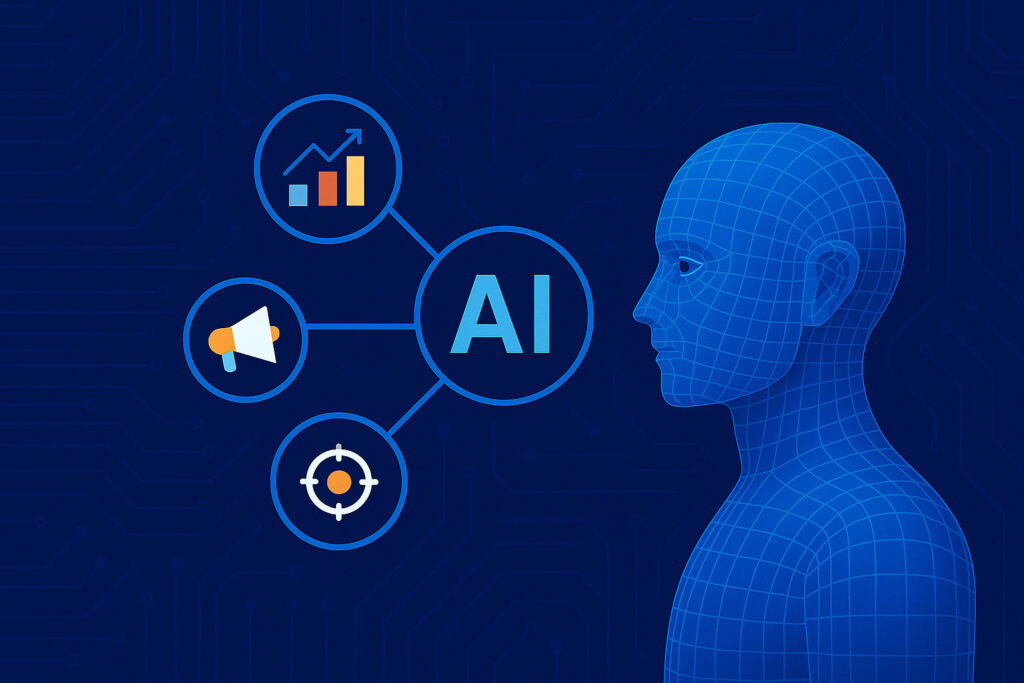
Artificial intelligence:
- It selects the best audience.
- It automatically allocates the budget.
- It highlights the best-performing ads.
- It prevents unnecessary spending.
Google’ın 2025 Performance Max güncellemesi tamamen AI odaklıdır ve ROAS sonuçlarını ortalama %20–50 artırmaktadır.
2. SEO and Content Optimization
AI is used in SEO in the following areas:
- Keyword analysis
- Competitive analysis
- Content optimization
- Identifying technical SEO errors.
- Core Web Vitals improvement suggestions
- Search intent analysis
Google's 2025 algorithm is entirely user-centric, and artificial intelligence is faster than humans at reading this data.
3. Email Marketing and CRM Automation
AI enables personalized email delivery to each user:
- Special message for those who abandoned their cart.
- Promotion for customers who haven't made a transaction for 3 months.
- Welcome series for new members
- Post-purchase guidance email
These messages are thanks to AI. The right person – the right time – the right content It is sent according to the rule.
4. Social Media Management and Content Planning
Artificial intelligence automates social media processes:
- The content title suggests...
- Optimizes post designs.
- Sets the sharing times.
- It anticipates topics that will increase interaction.
This also leads to faster growth.
5. Customer Journey Automation
Artificial intelligence takes action based on users' activities within the site:
- Discount offer when closing the site
- Campaign for those looking at specific products.
- Notifications for those who do not open the mobile application.
- Loyalty program recommendations
Advantages of Artificial Intelligence in Digital Marketing
✔ Lower advertising costs
Because optimization is better, unnecessary spending decreases.
✔ Understanding customer behavior
AI's analytical power surpasses human capacity.
✔ Higher conversion rates
Conversion rates increase when the right message is delivered to the right person.
✔ Time saving
Content creation and analysis processes are much faster.
✔ Higher brand loyalty
A personalized experience connects the customer with the brand.
How to Create a Digital Marketing Strategy with Artificial Intelligence?
The following steps form an AI marketing plan that even SMEs can quickly implement:
Step 1: Analyzing the Existing Data
All customer data, sales reports, and advertising performance should be analyzed using artificial intelligence.
Step 2: Target Audience Segmentation
AI identifies the most valuable customers:
- Frequent shoppers
- Those who abandoned the basket
- Those who were interested but did not buy
- Users with high loyalty potential
Step 3: Content and Ad Automation Setup
Automation is implemented in Google, Meta, CRM, and email processes.
Step 4: Continuous A/B Testing
AI optimizes continuously, not just once.
Step 5: Performance Reporting
All decisions are data-driven.
Marketing Tools of 2025 That Use Artificial Intelligence
Top recommended AI tools for businesses:
- Google Performance Max
- Meta Advantage+
- HubSpot AI
- ChatGPT content creation
- Jasper.ai
- Zapier automations
- Klaviyo AI email automations
- Canva AI image generator
Businesses can grow faster with these tools.
Conclusion: Artificial Intelligence is the Present, Not the Future, of Digital Marketing.
Artificial intelligence is no longer a luxury for businesses, but a necessity for survival.
With the right AI strategy:
- More sales with a smaller budget.
- Stronger brand awareness
- Better customer experience
- Faster content production
- More efficient advertising spending.
It is possible to obtain it.